
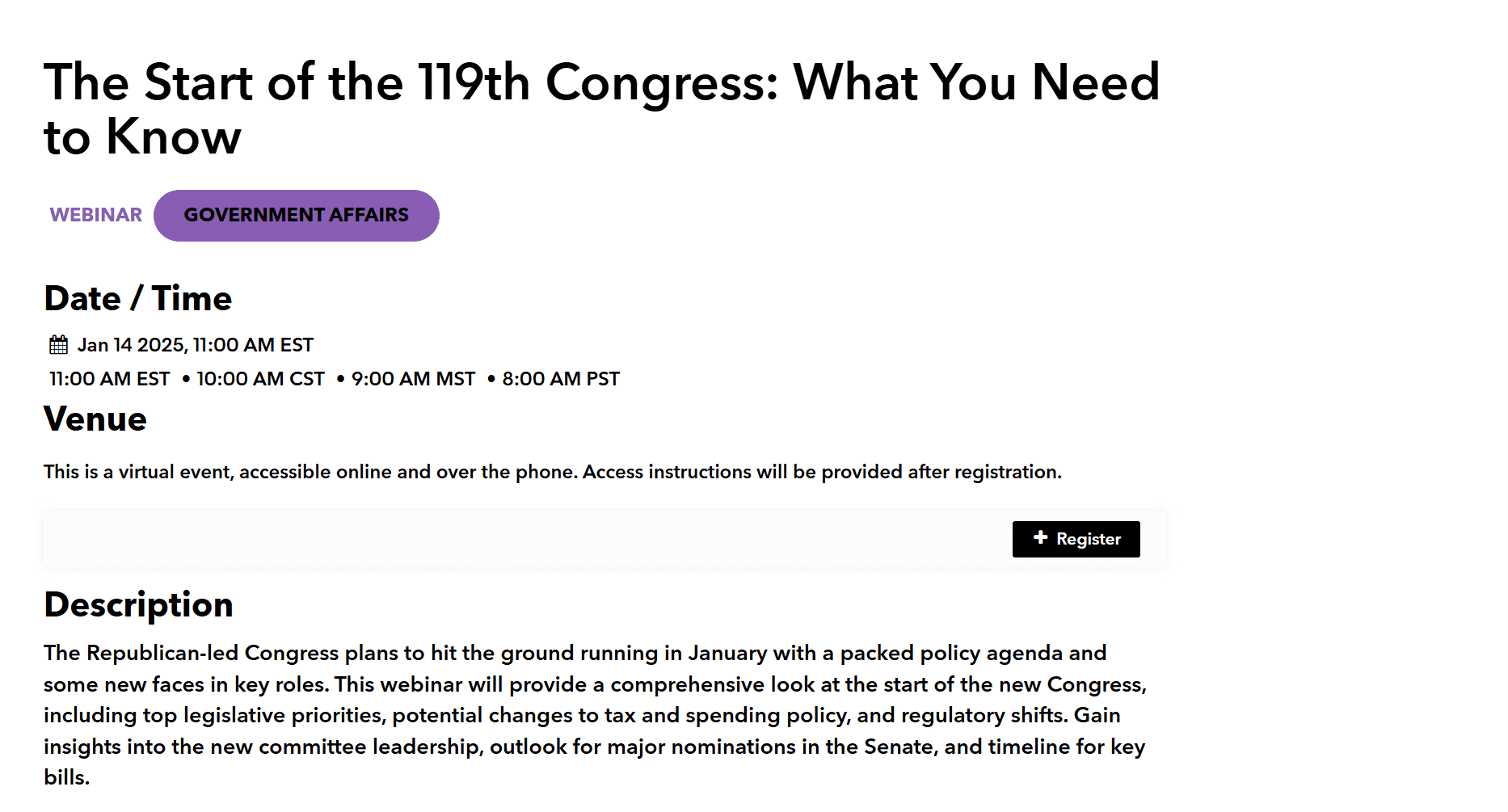
The Start of the 119th Congress: What You Need to Know
This webinar will provide a comprehensive look at the start of the new Congress, including top legislative priorities, potential changes to tax and spending policy, and regulatory shifts.
This webinar will provide a comprehensive look at the start of the new Congress, including top legislative priorities, potential changes to tax and spending policy, and regulatory shifts.
This special extended webinar event includes talks given at the 21st Annual EPA Drinking Water Workshop on September 17-19, 2024.
Join the Combined Defense Project 3.0 and our partners for the first in a series of briefings to understand practical insights into how to best make your messages resonate with your targeted audience.
Increased availability and accessibility to 10-m landcover, topographic, and environmental data alongside tools and computers to process these data at the continental scale support large-scale landcover modeling
Join us to hear from these thought leaders on 2025’s big decisions, including upcoming opportunities and challenges with congressional and federal regulatory activities, and how looming federal court decisions may change decisionmaking into the future.
This webinar will review results from the Water Resources Chapter of the 2020 RPA Assessment, summarizing recent trends and future projections of freshwater use and supply, as well as likelihood of water shortages to 2070 based on RPA scenarios and how those shortages impact communities throughout the United States.
Join the Environmental Polling Consortium for a presentation of the results from new message testing showing the most effective ways to respond to Trump's executive orders on energy and the environment.
This webinar will provide an overview of ongoing EPA ORD research related to alternative water sources including decentralized water reuse, protein processing plants, treated produced water from oil and gas activities, and enhanced/managed aquifer recharge, as well as collaborations with our partners.
During an incident that disrupts the availability of drinking water on a large-scale or regional basis, clarity in the roles and responsibilities of those involved with locating, securing, and delivering an emergency drinking water supply (EDWS) will be critical.
Join us on Monday, March 3 to learn about budget reconciliation and just how state advocates can save the IRA's clean energy programs.
When community infrastructure is damaged from storms, contaminated floodwaters can become a problem. It is important for emergency responders to understand how water systems can be decontaminated and returned to service so that communities can begin to recover.
Join L4GG and Washington Maritime Blue on March 14 at 11am to learn more about how your clean energy fueled shorepower project, EV Charging Infrastructure, or clean port handling equipment could be eligible for federal tax credits.
Tracking federal investments in our water system
© Copyright 2023 Built by Atlas Public Policy in Washington, DC
The Water Program Portal has been developed with support from the Water Foundation’s Water Solutions Fund