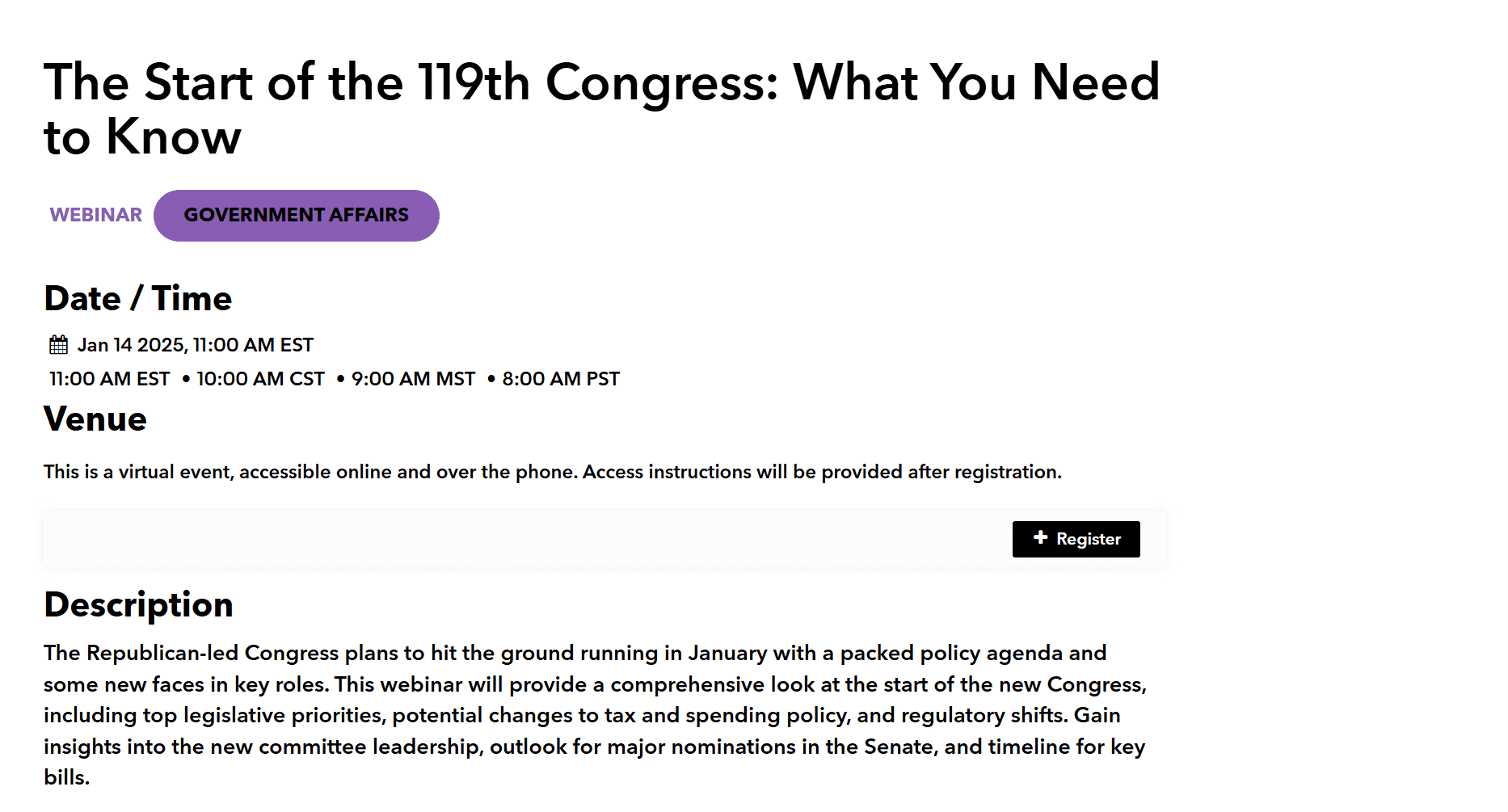
The Start of the 119th Congress: What You Need to Know
This webinar will provide a comprehensive look at the start of the new Congress, including top legislative priorities, potential changes to tax and spending policy, and regulatory shifts.
This webinar will provide a comprehensive look at the start of the new Congress, including top legislative priorities, potential changes to tax and spending policy, and regulatory shifts.
This webinar will explore three areas of participatory science focus at EPA: role of participatory science at EPA, key considerations and resources available when starting a project, and lessons learned and project spotlights.
Over the past several years in EPA Region 6, splash pads connected to disinfected drinking water have been at risk of contamination. Presenters will discuss their investigation into this issue, identify best management practices, and provide risk mitigation tools for prevention and detection of various waterborne disease outbreaks.
By leveraging this knowledge, EPA remains committed to providing clear, actionable, and accessible information about PFAS to the public, researchers, and risk assessors.
Presentations will include an overview of EPA regulations and programs designed to reduce lead in drinking water and current efforts to provide technical assistance for lead service line identification; a review of new technologies, methods, and predictive modeling tools for identifying service line materials; and an overview of sampling methods for identifying lead service lines.
Released in November 2023, the Fifth National Climate Assessment (NCA5) is the US Government’s preeminent report on climate change impacts, risks and responses. Led by the U.S. Global Research Program (USGCRP) and its 14 member agencies, including
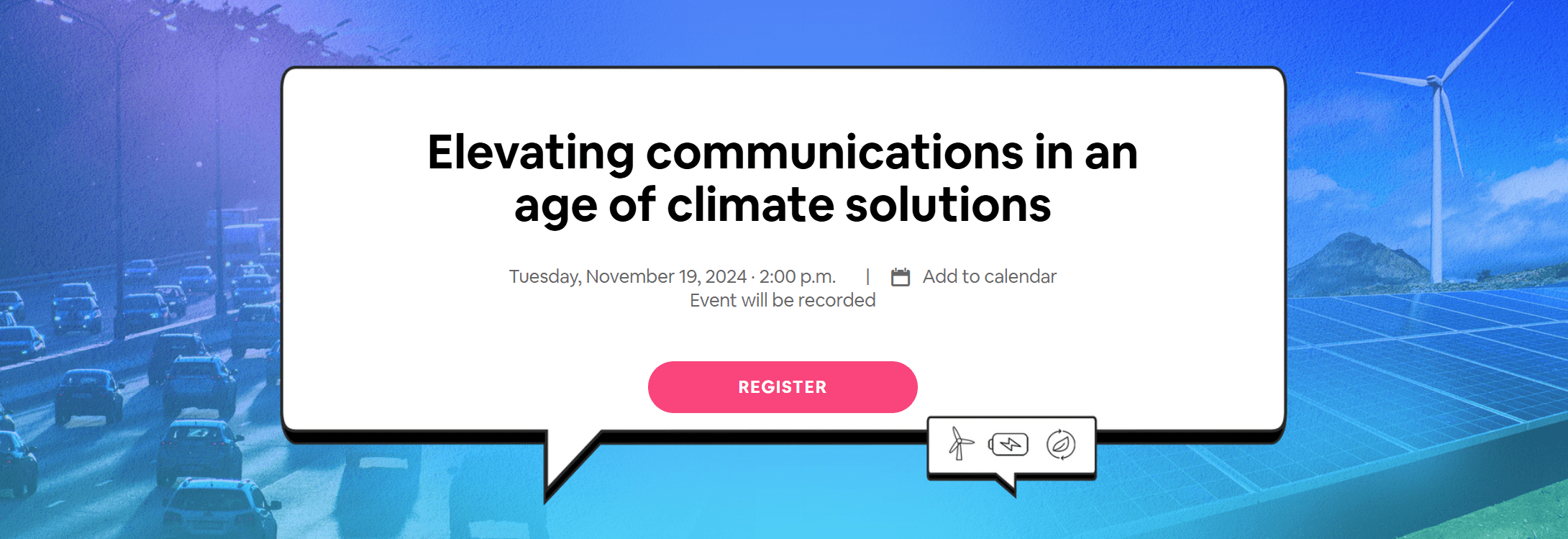
Join Canary Media, RMI, twentytwo & brand and Wärtsilä Marine for a conversation about effective storytelling and communications as climate solutions abound.
Join the Grid Deployment Office (GDO) for an overview and lessons learned from applications submitted for the Maintaining and Enhancing Hydroelectricity Incentive (EPAct Section 247). This session will also provide lessons learned in the development of a Community Benefits Plan (CBP).
The research team will focus on SCU for water supply augmentation where a primary objective includes augmenting (or offsetting) use of existing supplies through potable and/or non-potable applications.
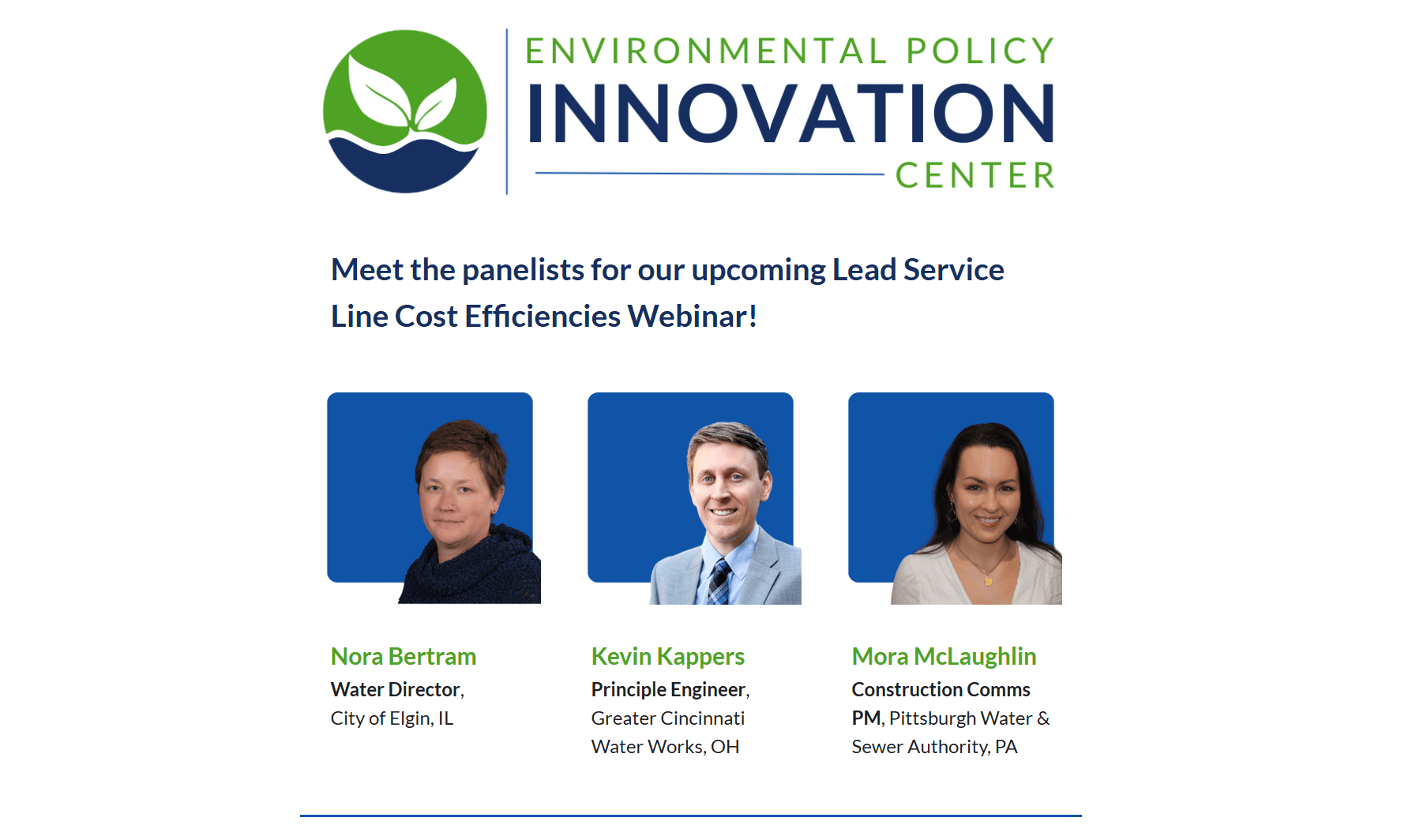
This is a national webinar focusing on cost efficiency opportunities for lead service line replacement (LSLR) activities.
In this webcast, presenters will share key findings from the study, offering practical recommendations for monitoring and managing L. pneumophila in public water systems.
This webinar is for new proponents and operators of existing MAR schemes to assist them in recognising the potential for clogging and how to employ the appropriate mitigation or remediation measures.
Tracking federal investments in our water system
© Copyright 2023 Built by Atlas Public Policy in Washington, DC
The Water Program Portal has been developed with support from the Water Foundation’s Water Solutions Fund