The Farm Bill is not commonly thought of as a water policy tool. More often associated with nutrition assistance programs such as SNAP, the legislation is one of the federal government’s largest investments in agriculture, conservation, and rural development. Through programs that support soil health, land conservation, and agricultural stewardship, the Farm Bill has also long influenced watershed protection, water quality, and flood resilience.
The House’s proposed bill for fiscal year 2026, goes a step further by including updates to watershed infrastructure authorities and funding. Section 2403, titled the Watershed Protection and Flood Prevention Act, highlights how agricultural policy can impact the future of watershed resilience and water infrastructure investment.
Watershed management plays a critical role in reducing flood risks, filtering pollutants through forests and wetlands, recharging groundwater supplies, and improving downstream water quality. Despite their importance, watersheds face growing pressures from aging infrastructure, increased flooding risks, and land-use changes. These challenges affect both natural watershed features—such as forests, wetlands, and floodplains—and built infrastructure, including dams, levees, and flood-control structures. These pressures are already evident nationwide; an EPA assessment found that “55 percent of the nation’s flowing waters are in poor biological conditions.”
Figure 1: The U.S. Watersheds
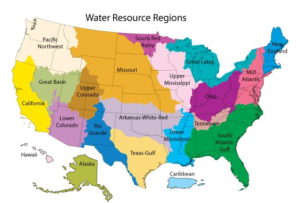
Source: Watersheds in the United States, Environmental Protection Agency
What Changes in Section 2403?
There are four notable changes in Section 2403 that watershed advocates should monitor:
1. Expands eligibility for watershed rehabilitation
Section 2403 takes a proactive approach in helping communities address vulnerabilities before failures occur, not solely. The bill repairs to aging watershed infrastructure when design flaws, premature component wear, or storms exceeding the original design capacity cause damage.
2. Streamlined assistance
The proposed section aims to reduce regulatory and procedural barriers by enhancing interagency coordination, reviews, and permitting. The USDA would publish best practices and grant State Conservationists more decision-making authority. Another strategy included to enhance funding by prioritizing agreements to more efficiently get funding to local organizations. The legislation does not prescribe how these strategies will be enacted, giving USDA flexibility to implement these measures in the future.
3. Increased funding
The proposed bill would increase the federal cost share of repair and watershed maintenance work supported by the Watershed Protection Flood Prevention Operations program from 65 percent to 90 percent. This reduces the financial burden on grantees required to receive federal support. Currently enacted financial procedures would also be changed: the House’s Section 2403 “removes the requirement that 20% of total benefits of the watershed rehabilitation project must relate to agriculture, which may include rural communities. [And] removes the requirement that more than 50% of land situated in the drainage area above retention reservoirs have agreements to conduct recommended soil conservation measures and farm plans.” These changes are expected to increase spending by $54 million from FY2026-FY2036, per a Congressional Budget Office cost estimate.
4. Enhanced certainty of watershed future
Section 2403 includes an extension of current appropriations through 2031. This provides a certainty of 5 more years to fund repairs and project implementation for watersheds.
What can communities expect moving forward?
Section 2403 of the House’s Farm, Food, and National Security Act of 2026 (H.R. 7567) would strengthen communities’ ability to invest in watershed infrastructure before failures occur. While Congress continues negotiating a new Farm Bill, with the 2018 law extended through September 30, 2026, investment in watershed resilience is already underway. For example, USDA recently announced a $3 million investment in wetland mitigation banking projects, supporting wetland restoration and conservation efforts that improve water quality, reduce flood risks, and strengthen watershed health.
In June, the Senate released its discussion draft, known as “Farm Bill 2.0,” which includes watershed provisions under Section 2801 titled Watershed Protection and Flood Prevention Act. The differences between the House and Senate drafts are as follows: the House version cuts local cost and eligibility barriers to support rehabilitation projects, while the Senate focuses more on administrative flexibility, faster implementation, and expanding eligibility for larger projects. Negotiations continue, with disagreements over SNAP continuing to stall a new FARM Bill among Congress. Regardless of the outcome, both proposals acknowledge the critical role watersheds play in supporting communities, farmland, and ecosystems. The Water Program Portal will monitor watershed-related provisions as lawmakers work to reconcile the two bills.