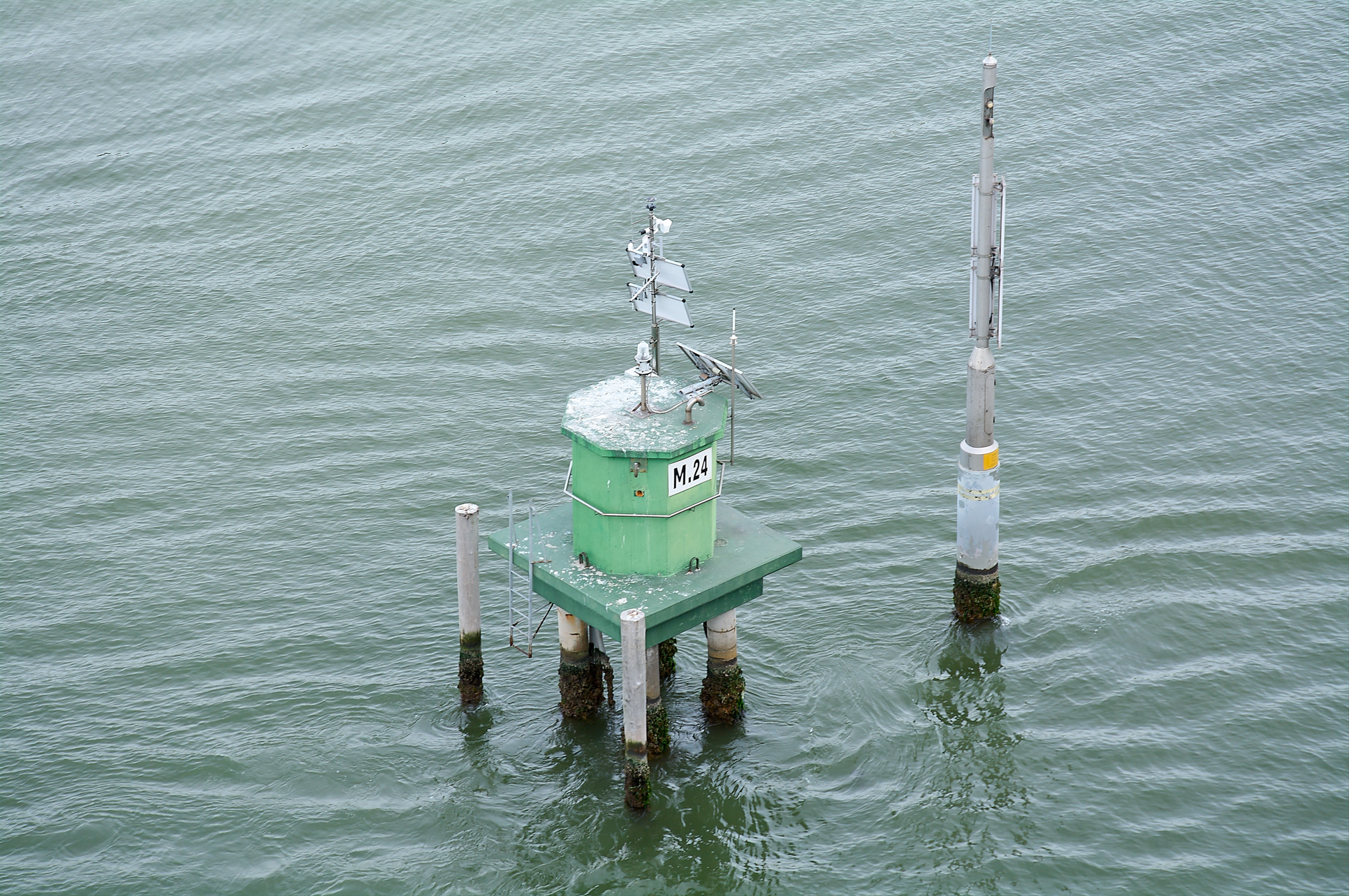
The Ocean Observatories Initiative (OOI) is a network of about 900 deep-sea and moored aquatic instruments placed across the Atlantic and Pacific Oceans (Figure 1). The project is federally funded by the U.S. National Science Foundation (NSF) and began construction in 2009 and was deployed in 2016, with a projected operational lifespan of 30 years. Its data collection is vast and imperative for weather and climate predictions—yet the system came under a threat of dismantling last month.
Figure 1: Ocean Observatories Initiative Arrays
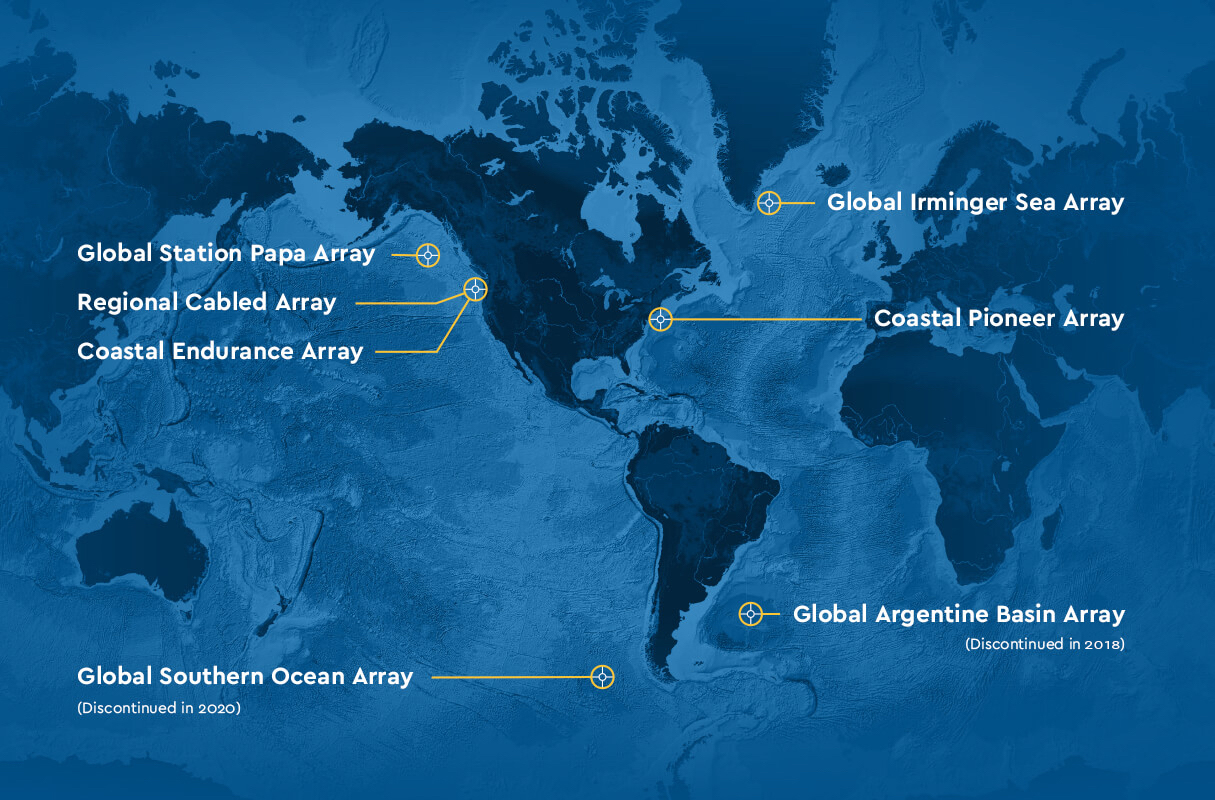
Source: Ocean Observatories Initiative.
The system’s deployment and maintenance have cost about $368 million over the past decade as it works to collect live data, 24/7, on ocean health indicators, including sea chemistry, changes to currents, and other keystone climate indicators that drive and shift weather and climate conditions worldwide. Even more, the data is publicly available and free, allowing for the creation of additional community tools and resources to further the ocean science community’s progress and interconnection.
The data the OOI collects is useful in a variety of research sectors and provides data that informs weather and natural disaster forecasting, events with real and potentially heavy effects on communities. In terms of themes, the OOI contributes toward quantifying:
- Oceanic-atmospheric exchange, which contributes toward estimates of energy and gas exchange between the deep and surface oceans to enhance the accuracy of storm forecasting and climate change models;
- Climate variability and how that variance impacts ocean circulation, marine ecosystems, the ocean’s biochemistry, and weather patterns;
- Turbulent mixing, or the mixing of biophysical materials within the ocean and the mixing of energy and gases between the atmosphere and ocean, which impact an array of biological processes;
- Coastal ocean dynamics, and how various natural and human processes influence those dynamics;
- Ocean geodynamics driven by active tectonic plate boundaries, particularly initiating natural disasters including earthquakes, tsunamis, and volcanic eruptions; and
- Fluid-rock interactions altering the subseafloor biosphere.
In late May 2026, the NSF announced that it would be removing instruments in several locations, including off the coasts of Alaska, Oregon, North Carolina, Washington, and southeastern Greenland. In effect, all arrays except for the Regional Cabled Array would be downsized with all in-water machinery removed. Almost immediately, the plan was criticized by scientists and researchers working in oceanography.
Top of mind for those communities was how the ending of continual data collection would impact both economic activity and scientific capability to monitor climate tipping points. Individuals pointed to the negative effects the OOI’s removal would have on fisheries and fishing, weather forecasting, and flood mitigation. On the climate side, in addition to creating a dearth of information surrounding sea level rise as well as oceanic acidification and warming, the OOI provides crucial data as to the condition of the Atlantic Meridional Overturning Circulation (AMOC).
The AMOC is a set of currents that bring salty, warm surface water from the Atlantic tropics to the North Atlantic while moving deep, cold water from the North southward. The warmth brought northward keeps Europe warmer than other climates at the same latitude, like in Canada. As sea levels rise through the melting of freshwater ice sheets and sea ice, the water becomes less dense, slowing the current with the potential for it to stop altogether with horrendous global effects, as proposed by research released in June 2025 and in May 2026.
The data used to model the AMOC’s future comes from the OOI. Because of the system’s importance, representatives from both chambers of Congress appealed to the NSF to reverse its decision. The Senate went a step further, passing legislation in early June 2026 to preserve the OOI’s funding. These appeals and actions were heeded, with the NSF officially halting any action to descope the OOI on June 18, 2026.
While the effort to preserve the OOI ended in victory, other streams of funding for research infrastructure are at threat, including the Argo program—which monitors ocean temperatures and salinity—as well as two other programs contributing toward AMOC observations, OSNAP and RAPID, as detailed in this article from Grist. Accurate and timely climate adaptation and mitigation policy can only occur in an environment with robust data infrastructure, and robust data infrastructure can only be delivered via consistent funding. The United States has led for decades in the arena of oceanic data. This era of change is not the time for the nation to drop back.