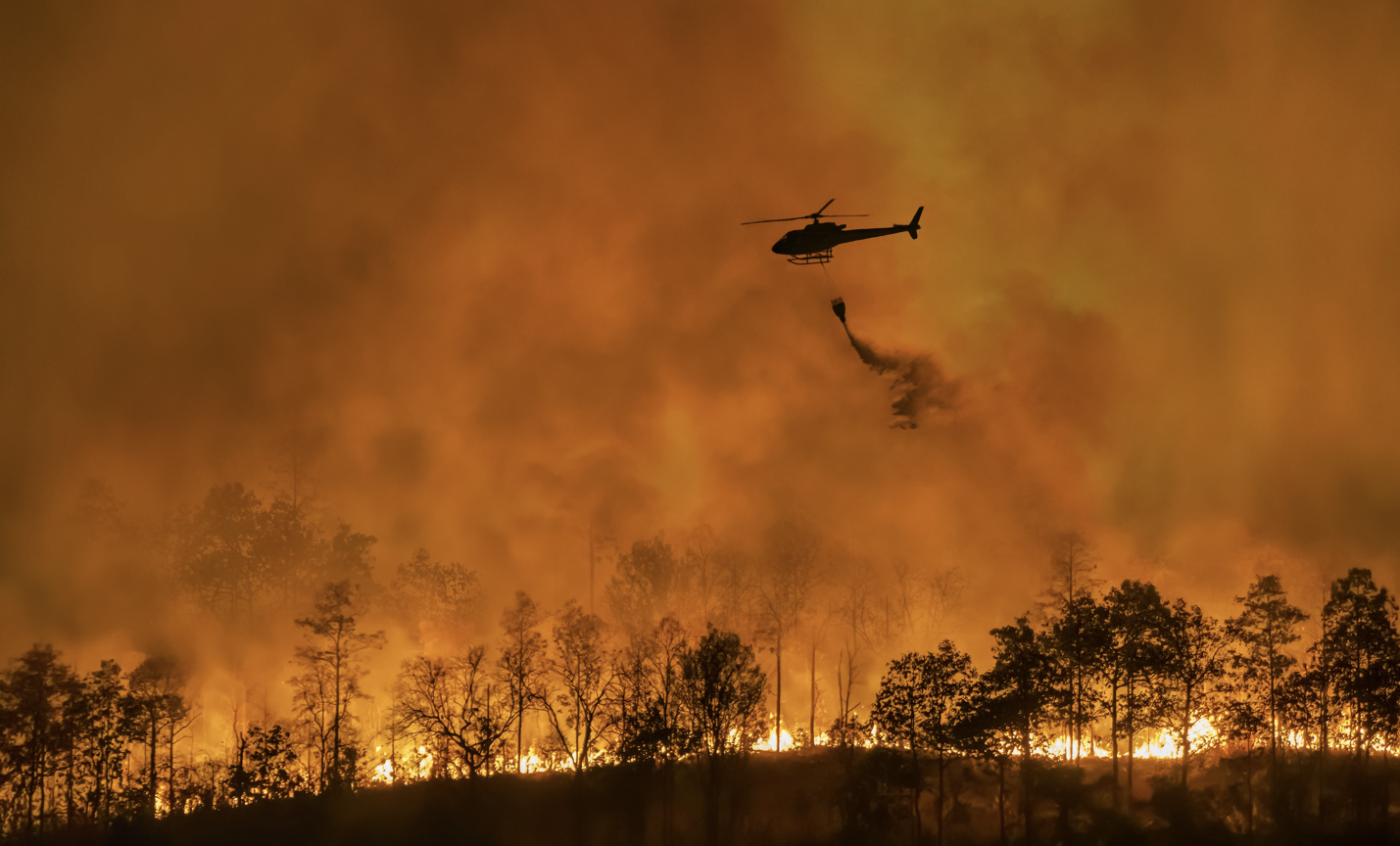
Wildfire season is upon us. Its arrival is evident not only in headlines but also in the hazy skies that cover communities across the country. As climate change drives more frequent and severe wildfires, the impacts are extending far beyond burned land and smoky air. An often-overlooked consequence of wildfires is the threat to drinking water systems.
Half of Americans receive drinking water from forested lands, with “180 million people relying on forest lands to capture and filter their drinking water” according to the U.S. Forest Service. The nexus of wildfire management and water quality has become an increasingly key area of and policy discussion while fires rage on throughout the US.
Wildfire Contaminants Persist After Fires
Wildfires leave behind hidden threats to drinking water systems that persist long after the flames are put out. Ash, sediment, and pollutants like volatile organic compounds (VOCs) can wash into rivers, reservoirs, and other water sources that supply drinking water to communities. Recognizing this occurrence, the Environmental Protection Agency (EPA) issued guidance for water systems on how to best address VOCs that contaminate drinking water systems after wildfires occur. Recommended strategies include sampling water at multiple points, isolating contaminated water, and flushing pipes to reduce VOC concentrations.
Wildfires can also compromise water quality through damage to water infrastructure itself. Extreme heat can melt plastic pipes and plumbing components, releasing harmful chemicals into drinking water. There are emerging areas of studies that link plastic pipes, wildfires, and released VOCs in drinking water, with communities finding benzene in their drinking water after the California fires of Tubbs in 2017 and Camp in 2018.
Addressing Risk Through Landscape Management and Investments
Addressing wildfire-related water risks requires a combination of proactive landscape management and targeted infrastructure investment. Wildfires are a natural part of many ecosystems, but fire suppression has allowed forests to become overgrown, contributing to fires that burn hotter and more intense. Practices like forest thinning and prescribed burns help restore more natural fire regimes. In parallel, floodplain restoration, and watershed protection can and limit the flow of ash, sediments, and other contaminants into drinking water sources. Strategic landscaping and the use of native vegetations can further protect water quality through soil stabilization and erosion reduction.
Federal initiatives such as the Collaborative Forest Landscape Restoration Program support these efforts, with 33 projects underway across the country to improve forest resilience. One example is the Colorado Front Range Landscape Restoration Initiative, where funding has supported forest monitoring and restoration activities aimed to “decreased forest densities, increasing gaps and openings, and increasing herb cover.”
Financing is another key component for strengthening water system resilience before and after wildfires. The EPA state revolving funds (SRFs)- drinking water and clean water- can support projects that mitigate wildfire risks and aid recovery including forest restoration, fire suppression equipment, backup power systems, protective barriers, and repairs to damaged treatment facilities.
The Uncertain Future for Water-Fire Nexus Funding
In federal fiscal year 2026, Congress appropriated $2.77 billion for the Clean Water and Drinking Water SRFs. However, with IIJA funding set to expire and the Trump administration proposing significant reductions to SRF appropriations, total funding for these programs could decline by nearly 80 percent. The current administration has repeatedly proposed reductions to SRF funding in the past, yet Congress has historically rejected these cuts. SRF advocates argue maintaining federal support is essential, especially for small, rural, and underserved communities that often lack the financial and technical resources to address water challenges on their own. Such cuts could limit the ability of states and water utilities to invest in wildfire mitigation, watershed protection, and the infrastructure upgrades needed to strengthen resilience before and after wildfire events.
Integrating landscape restoration with water infrastructure will be essential for drinking water supplies and strengthening community resilience against fires. As wildfire seasons grow longer and more destructive, research and policy discussion is required to further bridge wildfire mitigation efforts and water infrastructure.