
In February, Safer States, a nationwide coalition of environmental health organizations, released its 2026 Analysis of State Policy Addressing Toxic Chemicals and Plastics. The report found that in 2026, 33 states (or more, depending on what bills are introduced down the line) will evaluate more than 275 policies pointed at removing toxic chemicals and plastics from our environment (Figure 1). Additionally, at least 15 state laws and regulations will come into effect this year, enhancing public health standards and protections for about 62 million people nationwide. Policies addressing PFAS represent the majority, with 31 states at the very least considering new legislation this year.
Figure 1: States Considering Policies Addressing Toxic Chemicals and Plastics in 2026
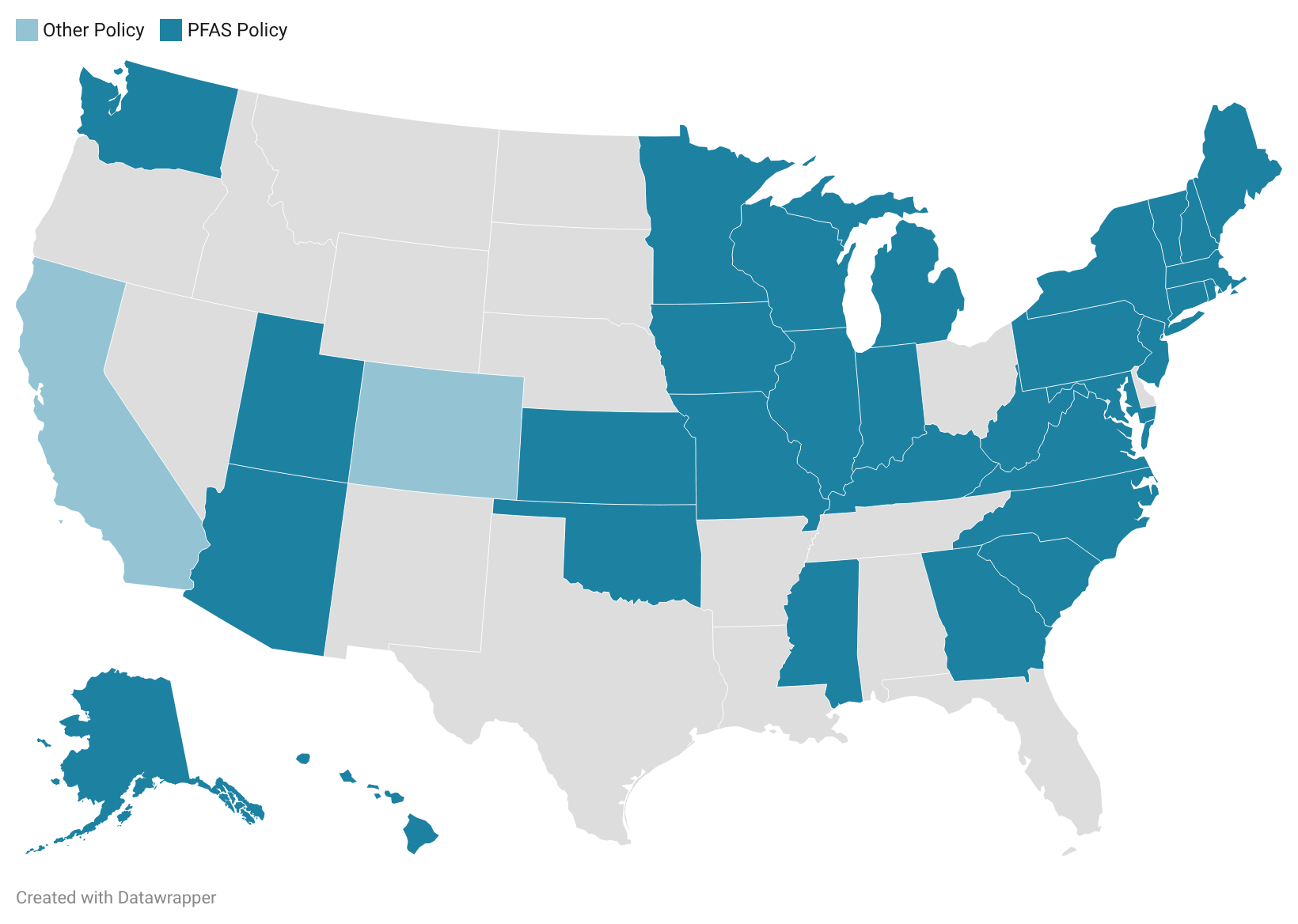
Source: Safer States.
The span of these policies is wide. Some states are setting their first enforceable drinking water limits for PFAS, while others are beginning to regulate industrial emissions of PFAS into the environment and water sources. Still others are rolling out requirements to test water regularly to monitor PFAS levels, and even more are allocating funding and other resources to begin PFAS cleanup.
This legislative wave establishes a strong foundation to begin addressing the public health risk that almost 150 million people nationwide face: PFAS in their drinking water. Moreover, according to a USA Today analysis, about 50 million people are drinking water with “unsafe levels” of PFAS. These are the customers of 298 water systems, which have reported PFAS quantities between three and 86 times EPA’s healthy limit; another 720 water systems report containing up to three times above the healthy limit.
On the bright side, most water systems — 6,758 nationwide — did not have any detectable quantity of PFAS, while another 2,481 came in under EPA’s limits or had PFAS that EPA does not currently regulate. The item of unregulated PFAS is a problem to tackle once baseline PFAS legislation and protective policies have been rolled out. EPA regulates only six types of PFAS and has identified almost 1,500 toxic PFAS, 770 of which are on the Toxic Substances Control Act’s active inventory, out of the about 15,000 EPA recognizes; estimates put the number of PFAS about seven million and growing, a daunting public health challenge.