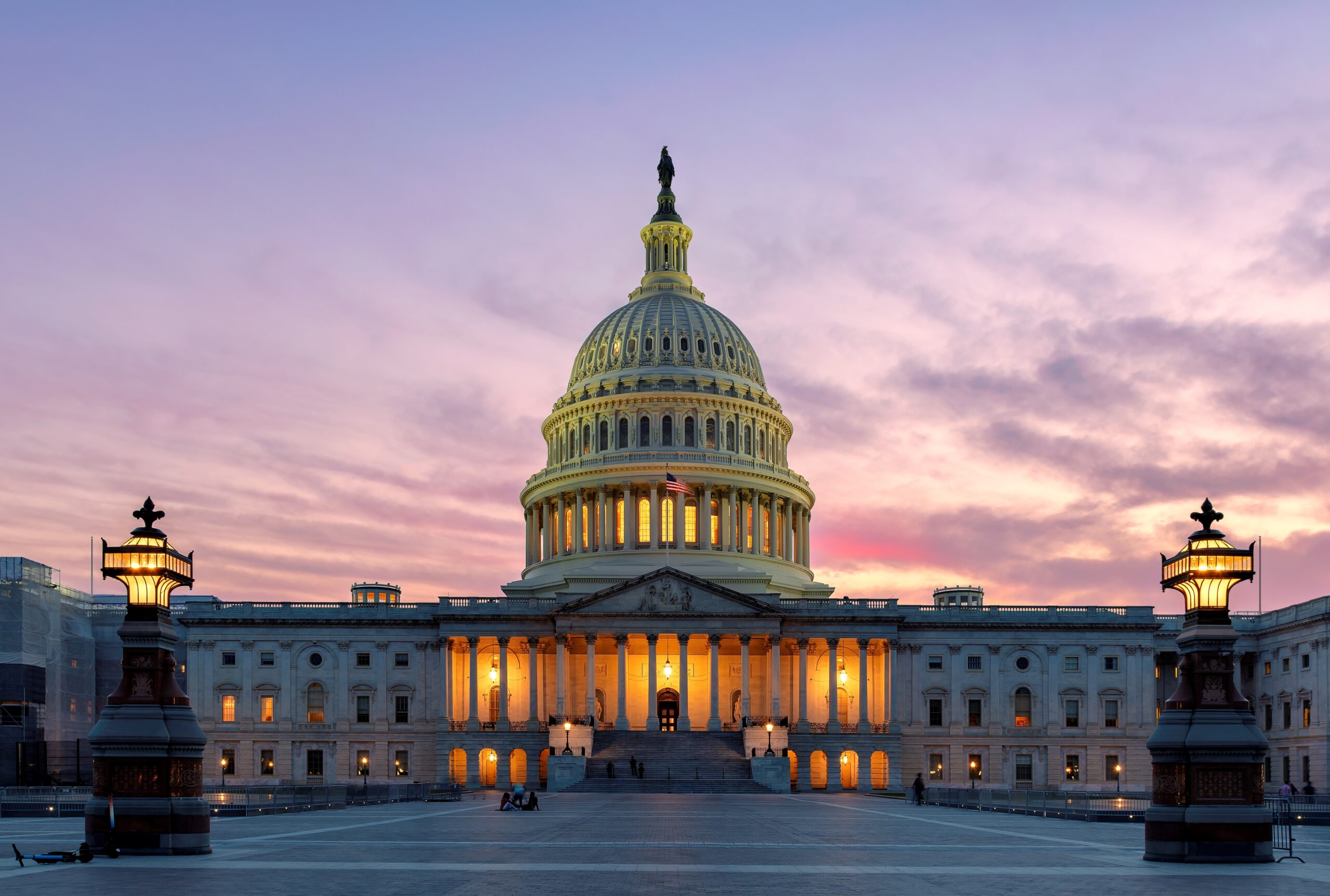
Congress is under pressure to fully fund the government by January 30th. Thus far, Congress has passed through six of the 12 regular administrations’ appropriations bills for this fiscal year, including the Interior and Environment appropriations, which passed in the House in a 397-28 vote on January 8th and passed the Senate in an 82-15 vote on January 15th. Now, the bill sits on President Trump’s desk, awaiting his signature.
The toplines from the bill are encouraging, especially when compared to President Trump’s budget proposal released on May 2nd. The package includes $38.6 billion in total, $8.8 billion of which is dedicated to the Environmental Protection Agency (EPA). Notably, Congress did not act on Trump’s request to cut State Revolving Loan Fund (SRF) funding by 90 percent or $2.46 billion. Instead, both base SRF programs suffer just minor cuts, with the Clean Water State Revolving Loan Fund (CWSRF) being funded at $1.639 billion and the Drinking Water State Revolving Loan Fund (DWSRF) being funded at $1.126 billion. $1.6 billion across both SRFs has already been earmarked by members of Congress for specific projects, leaving $860 million for other SRF projects.
The SRFs will also gain a more than $5 billion boost from the final year of Infrastructure Investment and Jobs Act funding. The lead service line replacement program nested within the DWSRF will receive $2.875 billion, and the supplemental DWSRF gains about $2.5 billion. The CWSRF will gain $2.6 billion, while the DWSRF Emerging Contaminants program will be funded at $829 million with its CWSRF equal receiving $225 million — these details and state allocations are available on the Water Program Portal’s Outcomes Dashboard.
Another bit of EPA-related funding set in the package is the $64.6 million for the Water Infrastructure Finance and Innovation Act loan program; the program will receive an added $7.6 million for program management.
The U.S. Forest Service will also be funded with $8.6 billion, which will include funding for Cooperative Fire Assistance. Further, the Department of the Interior will receive $15 billion in total. $6.4 billion will be allocated for wildland fire management, $4 billion for Indian Affairs, $3.3 billion for the National Park Service, and $2.9 billion for the wildfire suppression cap adjustment (a mechanism allowing these monies for wildfire suppression to be exempted from discretionary spending limits, although it necessitates that another amount of baseline funding must be appropriated within the discretionary spending limits).
Finally, although separate from budget appropriations, the National Flood Insurance Program (NFIP) is also facing a January 30th deadline, this one for the expiration of its authorization. NFIP is managed by the Federal Emergency Management Agency (FEMA), whose fiscal year 2026 funding has yet to be solidified. Because private home insurance does not provide financial protection from flooding, the public program today insures about $1.3 trillion in property nationwide. If NFIP’s authorization expires, the program would continue to pay out verified claims with its available funding; it will not be able to sell new policies or renew existing policies. This lack of coverage will make home buying and selling more complicated, as having full home insurance coverage is generally required to secure a mortgage. NFIP requires periodic reauthorization so that Congress has the chance to alter the program, for instance to improve affordability, encourage participation, and check in on the program’s solvency.
The January 30th deadline is only about a week away. Still to come are versions of the fiscal year 2026 appropriations for Homeland Security and notes on NFIP’s reauthorization progress. The funding packages that have already been passed total $10 billion higher than the same packages in fiscal year 2025. However, recently announced packages, including the Interior and Environment appropriations, have added more cuts, diminishing total funding in comparison to last year by about $14 billion. The Committee for a Responsible Federal Budget has called for a halt to additional spending, naming the spending “unnecessary” after the funding infusions from the One Big Beautiful Bill Act and actions performed by the Department of Governmental Efficiency.