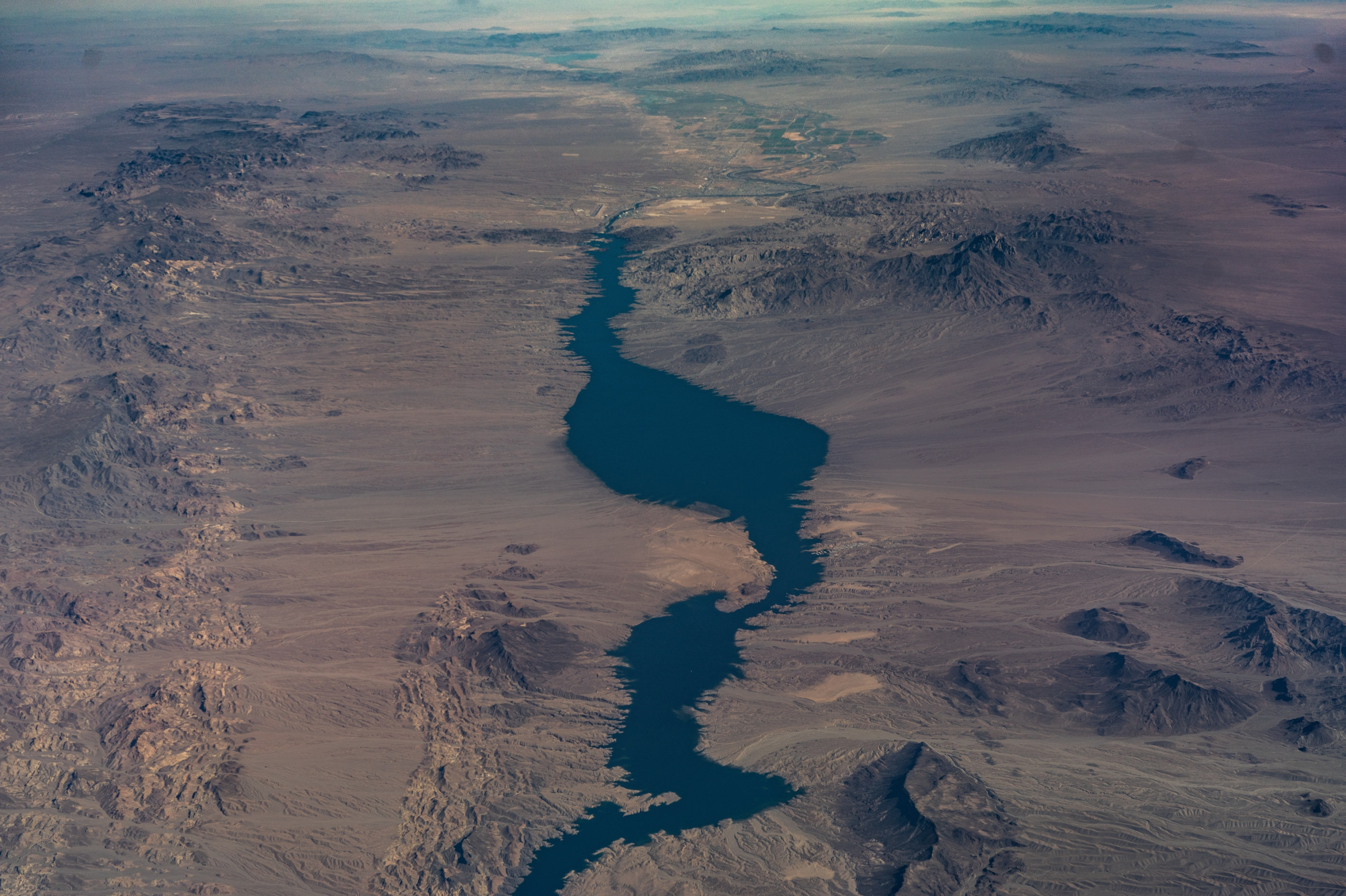
The Colorado River is one of the West’s most crucial resources. More than 40 million people depend on its water. But its flow is limited and threatened by an ongoing megadrought, driving the current years-long renegotiation process. This week, the Colorado River Water User Association (CRWUA) is convening for its annual conference. In addition to standard conference fare, policymakers, authorities, and stakeholders across the Colorado River Basin will caucus within their states, regions of the basin, and all together. Unfortunately, reporting across the region seems to indicate low expectations for what may be produced at the gathering.
From 2023 through 2025, short-term agreements were established to put pressure off of the region’s necessary development of a larger scale, longer term agreement. These agreements are set to expire at the end of 2026. As a result, all of the Upper Basin states — Colorado, New Mexico, Utah, and Wyoming — Lower Basin states — Arizona, California, and Nevada — the 30 regional federally recognized Tribal Nations, and Mexico must come to a solid agreement for the management of the water millions of people are dependent on, ahead of the August 2026 deadline for final operative guidelines.
The CRWUA conference is coming after stakeholders failed to produce a framework meant to guide ongoing negotiations on November 11th. The next deadline looms from February 14th, when a final agreement must be submitted to the Department of the Interior (DOI) and the Bureau of Reclamation. If the states are unable to forge an agreement, they force the DOI’s hand in terms of intervening in negotiations; DOI Secretary Doug Burgum has indicated, however, that DOI would prefer not to meddle and allow the seven states to come to their consensus.
In November 2024, the Biden Administration provided four potential paths forward after rejecting competing proposals from the Upper Basin and Lower Basin squads of states. The sketched-out plans were broad and did not pull entirely from either of the basins’ full plans. It is unclear how much ongoing negotiations draw from them. Reclamation hosts a page on the basin’s Post-2026 operations, although it has not been updated since mid-January.
The management of the Colorado River’s millions of gallons is inherently complicated with so many stakeholders at play. Old questions such as water rights seniority and the Upper versus Lower Basin state priorities are and will be perennial. Modern intricacies include declining snowpacks, increasing demand from data centers (particularly in the Lower Basin) and continued demand from agriculture, and the very supply crises at Lake Mead and Lake Powell that initiated the short-term agreements from 2023 to 2025. A report released this month by the Colorado River Research Group aptly titled the crisis facing the region: “Dancing With Deadpool.” The West’s 25-year megadrought is likely to continue, natural flows will continue to decline, and demand continues to rise. An agreement is more necessary than ever; leadership to guide that agreement is critical.
Last week, Sec. Doug Burgum had invited Colorado River Basin states to Washington DC to hopefully speed up negotiations. It does not appear as though the meeting was particularly fruitful. This week, Nevada Governor Joe Lombardo requested that Sec. Burgum reschedule another meeting for early January as “the [previous] meeting did not proceed as planned.”
While progress remains frustratingly slow, it is positive to still see all seven states at the table. Further leadership from the federal level is needed. The Bureau of Reclamation notably continues to sit without a commissioner. The states have indicated that even the threat of federal action can drive progress toward an agreement, with Arizona State Representative Greg Stanton noting that having no leader for Reclamation “is a bad situation.”
Greater inclusion of Tribal Nations, who hold about a fifth of senior Colorado River water rights, would also be better facilitated by federal action. Tribal representatives have spoken thoroughly about this need, leading to the creation of organizations like the Colorado River Basin Tribal Coalition and the Ten Tribes Partnership that actively lobby for inclusion. Recent steps — like the signing of a proclamation of collaboration and conservation between the Colorado River Indian Tribes, the Gila River Indian Community, and the Central Arizona Water Conservation District yesterday at the CRWUA conference — represent progress that can be further ushered in by federal encouragement.
After the conference, the Basin states will go back to work to meet the February 14th deadline for submitting their consensus-based plan. A draft Environmental Impact Statement is expected in early January which will not specify a preferred plan but instead present a range of plans; this release will involve a public comment period and initiates the National Environmental Policy Act (NEPA) review process. The Colorado River Basin agreement will be finalized over the summer, leading to a Record of Decision, the final step of NEPA review. New guidelines will take effect in October.