
The Building Resilient Infrastructure and Communities (BRIC) program was established in 2018 by the Disaster Recovery Reform Act to support pre-disaster mitigation efforts across the country. It is one of the Federal Emergency Management Administration’s (FEMA) primary disaster preparedness, recovery, and mitigation programs, alongside the Hazard Mitigation Grant Program and the Flood Mitigation Assistance Program. Since its formation, BRIC has become a significant source of funding as states and local governments aim to build resilience to natural disasters and mitigate the costs associated with disaster response and recovery.
Preventive infrastructure investments can reduce community losses by an order of magnitude. Federally funding hazard mitigation has been found to save an average of six dollars in future disaster costs for every one dollar invested. Given the benefits of resilience and mitigation investment, the Infrastructure Investment and Jobs Act (IIJA) boosted the program significantly in 2021, expanding the number of projects the program supported. However, these efforts largely came to a halt under the Trump Administration, which has systematically obstructed and attempted to terminate the program and its funding. This spotlight will dig into the program’s federal funding, recent awards, and the status of the legal battle over its termination.
IIJA boosted BRIC’s awards beginning in 2022
Annually, BRIC receives funding from the Disaster Relief Fund. In 2021, IIJA appropriated an additional $1 billion for the program to be distributed over five years. This boosts the program’s funding by about $200 million annually from fiscal year 2022 through 2026. BRIC supports state agencies, local governments, and Tribal Nations in states that have had a major disaster declaration in the last seven years with pre-disaster work.
Projects must align with a FEMA-approved Hazard Mitigation Plan. Activities range widely, including flood control measures like levees and floodwalls, wildfire risk reduction like fuel breaks, drought mitigation like conservation and backup supply systems, and implementing nature-based solutions like wetlands restoration and green infrastructure. Grants support up to 75 percent of project costs, though projects located in economically disadvantaged rural communities are eligible for up to 90 percent of the project costs. The remainder of a project is typically covered by state or local matching funds or other philanthropic contributions.
According to the Water Program Portal’s Outcomes Dashboard, FEMA had awarded just over half of the IIJA boost for the program by the end of 2024. Of the $582.8 million in IIJA funds awarded to BRIC projects, Alaska and Louisiana led the way in funding received, followed by South Dakota, California, Wisconsin, North Dakota, and North Carolina. In total, between fiscal years 2020 and 2023, the program awarded $4.6 billion according to OpenFEMA.
In April, the Trump Administration took aim at the program
In January 2025, BRIC released a notice of funding opportunity (NOFO) and call for applications, demonstrating intent to distribute another $750 million to disaster mitigation projects. However, in April 2025, FEMA took down the NOFO and suspended this planned FY2025 funding. The agency announced that it would pursue termination of the program, cancel all applications from fiscal years 2020-2023, and return all unspent IIJA BRIC funds to the Treasury. According to FEMA, roughly $133 million of the $582.8 million awarded had already been paid out by the agency to roughly 450 applicants across the country, leaving $882 million or 88 percent of what was appropriated by IIJA in 2021. Additional guidance from April 16th specified that the agency intended to cancel all of the BRIC projects selected but not obligated across fiscal years 2020-2023 and fully obligated projects that have not started construction.
Following this announcement, twenty states sued the agency in July 2025. The coalition claims that FEMA lacks the legal authority to terminate a program that was established by Congress. Following the lawsuit, a District Court issued a preliminary injunction in August, blocking FEMA from diverting BRIC funding while the litigation is pending. As part of the lawsuit, FEMA has recently stated that no grants have been definitively canceled.
Which projects are targeted for cancellation?
Given the ongoing legal battle, there is immense uncertainty surrounding the fate of projects funded by BRIC’s IIJA and general funding between 2020 and 2023. Likewise, it is uncertain whether FEMA will fully reinstate the program and begin accepting new applications under the fiscal year 2024 NOFO. We can, however, explore what types of projects were supported by the program to date, and identify where vulnerabilities lie.
Though it remains unclear if and when these grant cancellations will go through, the initial announcement by FEMA aimed to cancel unobligated and obligated but not yet started BRIC grants. If a grant is unobligated, the award has been announced but no legally binding agreement has been made between the government agency and the awardee. Prior to the Trump Administration taking office, unobligated funding was understood to be particularly at risk of diversion. Obligated funding was considered relatively safer, though not completely out of danger of termination.
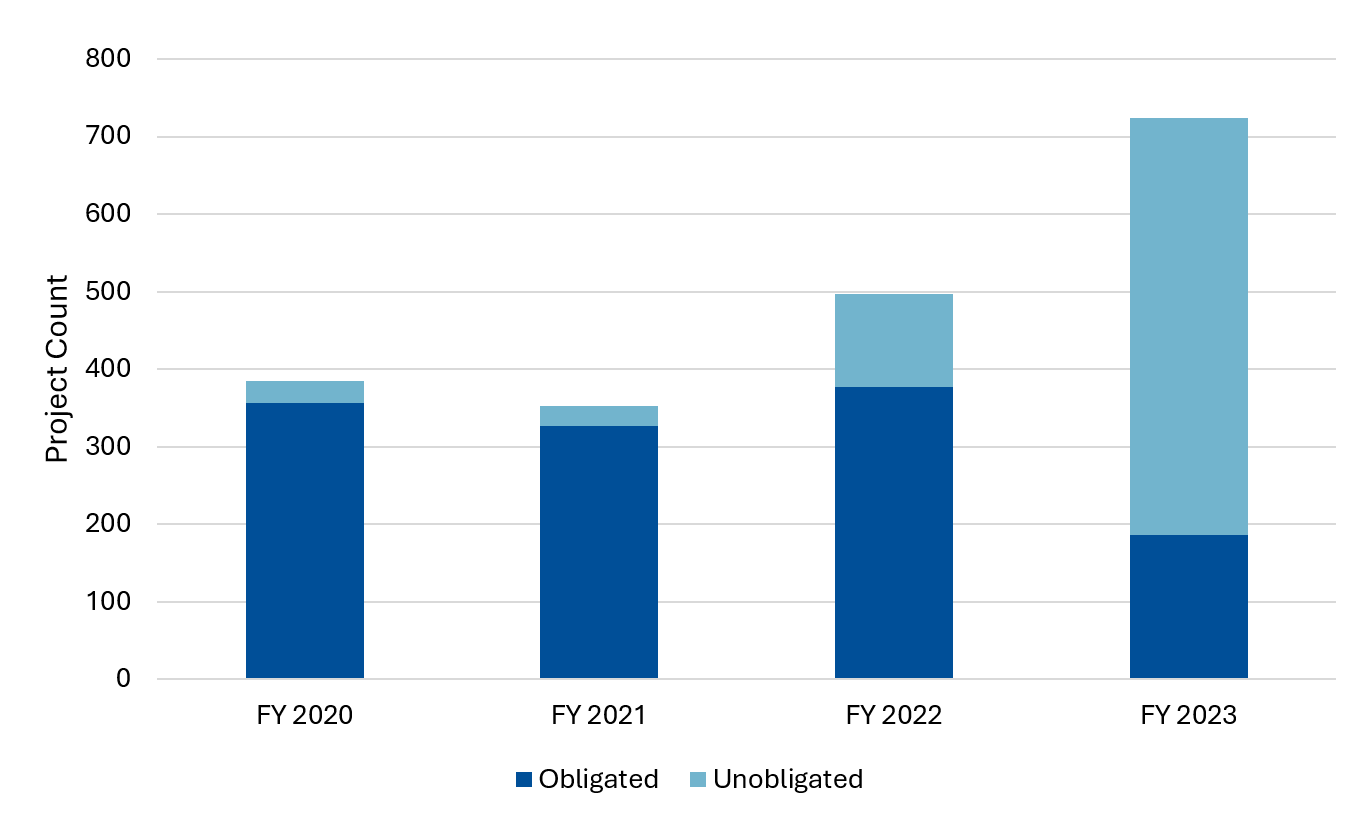
From fiscal years 2020-2023, 1,958 BRIC projects were awarded funding. Most of the grants awarded from BRIC in fiscal years 2020, 2021, and 2022 have been obligated. However, more than 500 fiscal year 2023 projects remain unobligated (Figure 1). In total, 1,246 projects have had their funding obligated, while 712 have not — 36 percent of projects awarded since 2020.
Figure 1: BRIC Grants Obligation Status
Source: Atlas Public Policy analysis using OpenFEMA HMA Subapplications, September 2025
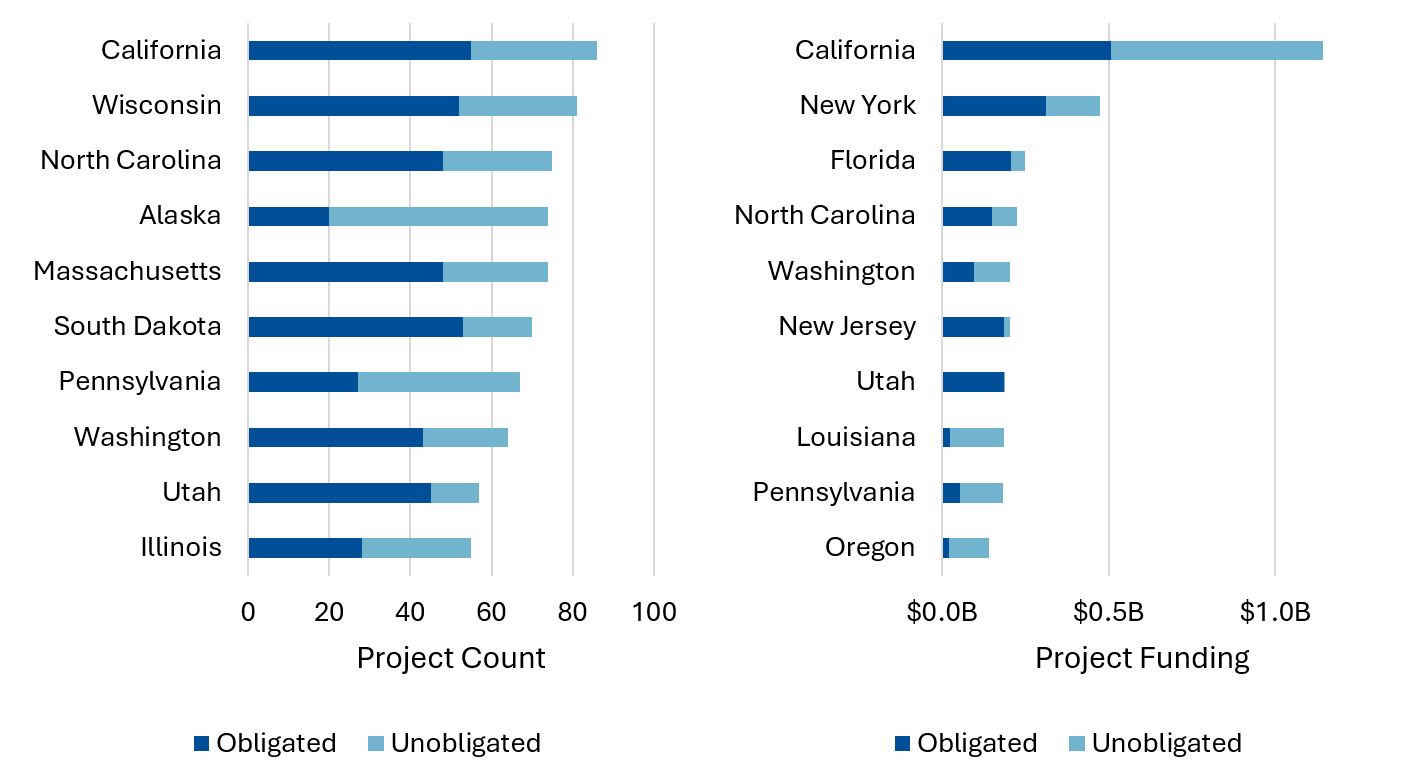
In the last four fiscal years, most BRIC funding has been awarded to projects in California, Wisconsin, and North Carolina, states that have suffered from natural disasters and long-term climate resiliency issues (Figure 2). Canceling these funds undermines community efforts to recover from natural disasters like the September 2024 Hurricane Helen, the January 2025 Southern California wildfires, or the recent flooding in Wisconsin.
Figure 2: Top 10 States with Unobligated BRIC Projects, by Count and Funding Total
Source: Atlas Public Policy analysis using OpenFEMA HMA Subapplications, September 2025
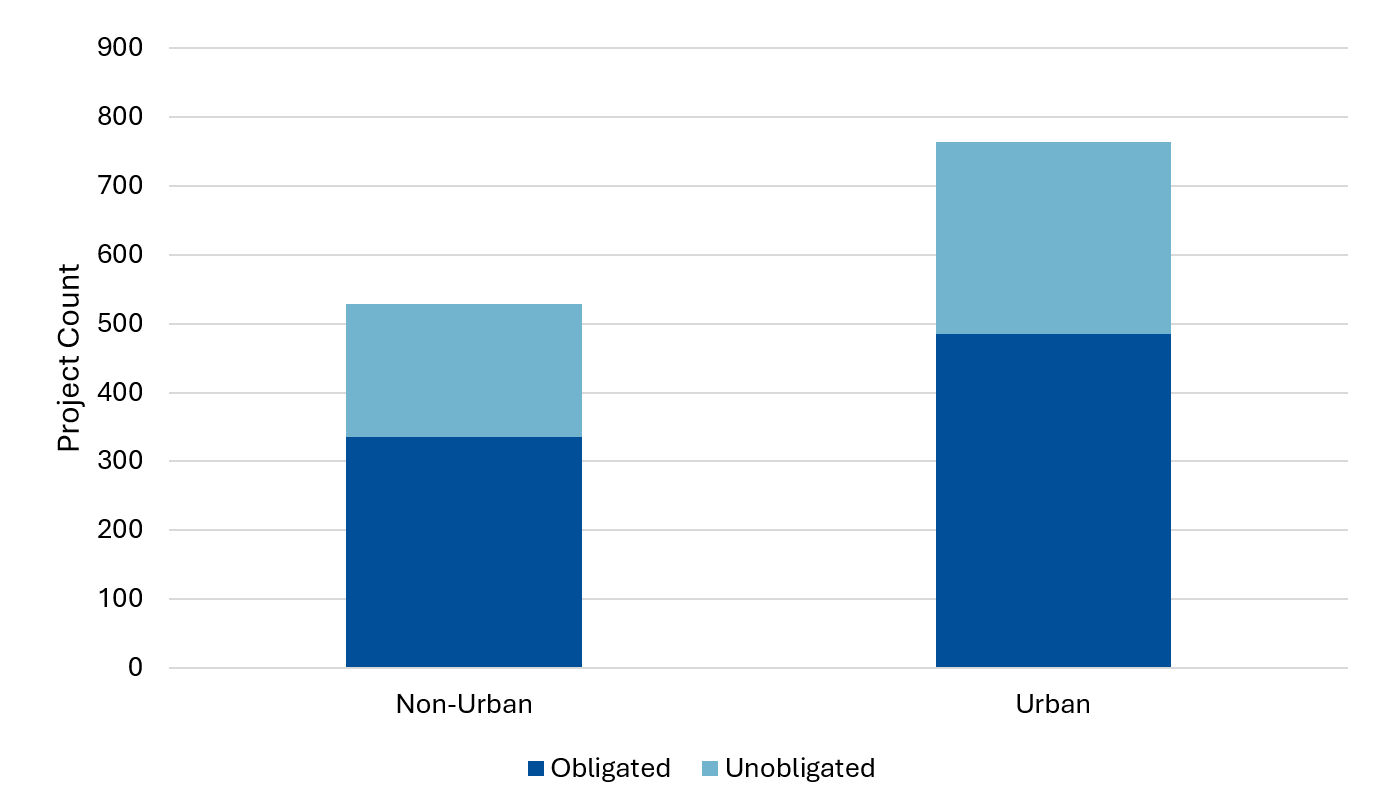
BRIC projects serve both urban and non-urban communities. While most of the unobligated projects are in urban areas (279), many are serving non-urban communities (193) or are operating across multiple counties (240) (Figure 3).
Figure 3: Projects serving urban and non-urban communities
Source: Atlas Public Policy analysis using OpenFEMA HMA Subapplications and USDA’s 2023 Rural-Urban Continuum Codes, September 2025 | Projects that benefit multiple counties were not defined as urban or non-urban.
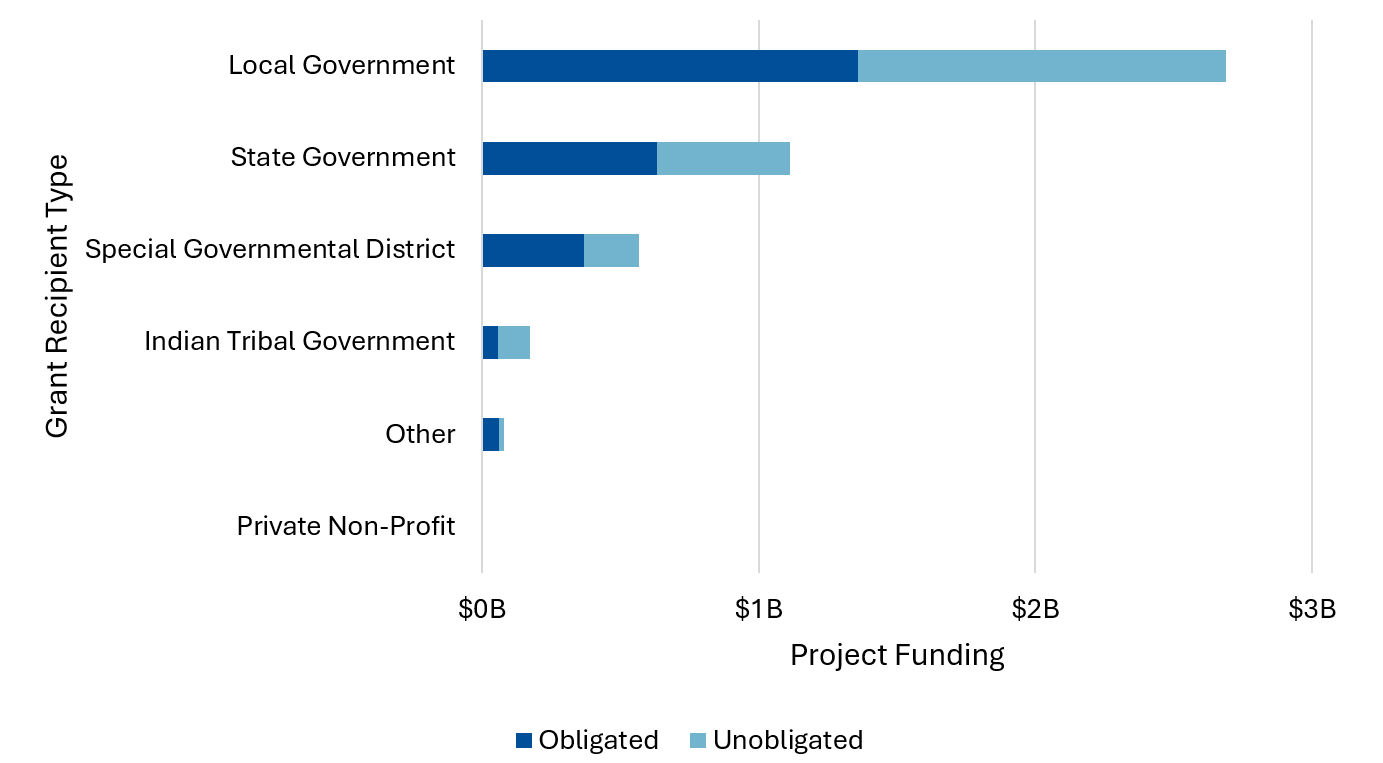
Finally, the overwhelming majority of BRIC funding is slated to support local governments and special districts, like water and wastewater, irrigation, and fire protection districts (Figure 4). Roughly half of these projects have yet to be obligated, totaling $1.5 billion in critical funding to help build resilience to natural disasters. Terminating these grants would be a blow to local communities, as the 85 to 90 percent federal match is often crucial to making mitigation and resilience projects fiscally feasible.
Figure 4: BRIC Projects by Recipient Type
Source: Atlas Public Policy analysis using OpenFEMA HMA Subapplications, September 2025
Since FEMA’s April announcement and the August injunction, the fate of BRIC projects has been unclear. While recipients await legal clarity, the funding rescission has halted often urgent local infrastructure projects, leaving communities with wide funding gaps to fill. For instance, in North Carolina, the Town of Hillsborough is short $6 million on a project to relocate their wastewater pump station out of the Eno River flood plain. Likewise, two storm prevention projects in Baton Rouge were stalled due to the program’s attempted cancellation. Beyond the financial impacts cuts like this have on projects, terminating grants is also beginning to undermine trust in federal support as applicants question whether the heightened risk, especially considering the effort involved in applying for a federal grant, is worth the reward.